
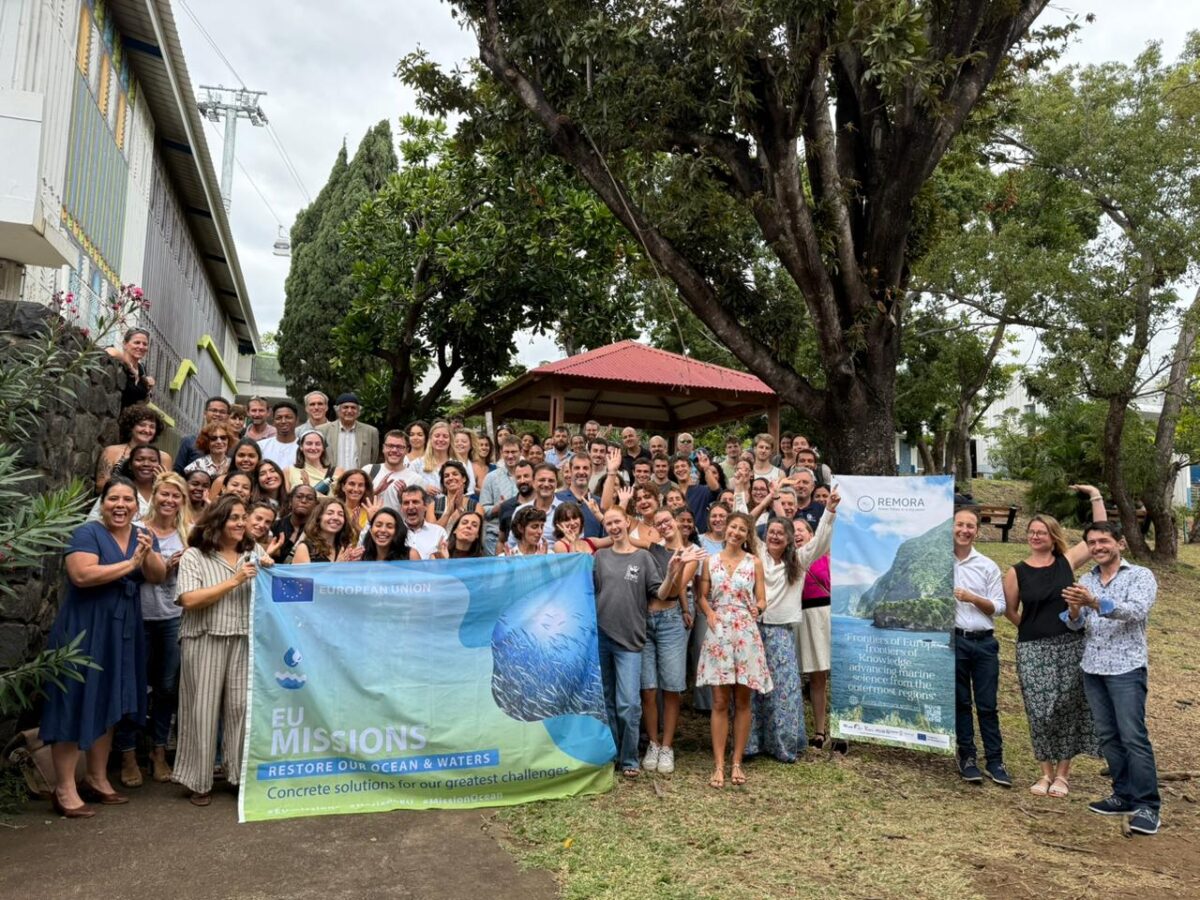
Five days of intense, inspiring exchanges. One shared conviction: outermost regions have their place in European ocean research. From 6 to 10 October 2025, La Réunion hosted the first REMORA International Symposium, under the theme “Bridging Horizons: Outermost Regions’ Marine & Ocean Sciences for Global Impacts”. The event unfolded across several emblematic sites on the island — from the Moufia Campus of the Université de La Réunion, where the scientific seminars took place, to CITEB’s research facilities at CYROI and Le Port, the Réunion National Marine Reserve, KELONIA and CEDTM.
The event brought together researchers, PhD students, entrepreneurs and institutions from La Réunion, Madeira, the Azores, Denmark, Cyprus, Spain, Italy and beyond. More than 80 local participants joined 12 European guests for five days of open, collaborative and inclusive marine science — exactly the kind of science REMORA was designed to nurture.
Organised by Ruizia in partnership with CITEB and with the full support of the Université de La Réunion and their Marine Ecology research Unit ENTROPIE, the symposium was a milestone not just for the REMORA project, but for the scientific community of La Réunion as a whole.
“Building European research from La Réunion means showing that our island territories are indispensable spaces for understanding the world’s oceans in all their complexity, fragility and interdependence.”
Five days, one shared ambition
The symposium was deliberately designed around quality of exchange rather than volume of participants. Its five-day structure moved from open scientific dialogue to hands-on collaboration to immersive field experience:
- Monday (6 October): Welcome of international participants and presentation of La Réunion’s marine research landscape.
- Tuesday (7 October): A full open day of scientific seminars, keynote addresses, and a networking and poster pitch session — the heart of the public-facing programme.
- Wednesday (8 October): Horizon Europe project development workshops — the “hackathon” — with the first concrete ideas for joint projects emerging between participants. The day also included a visit to the ENTROPIE lab and to CITEB’s facilities at CYROI.
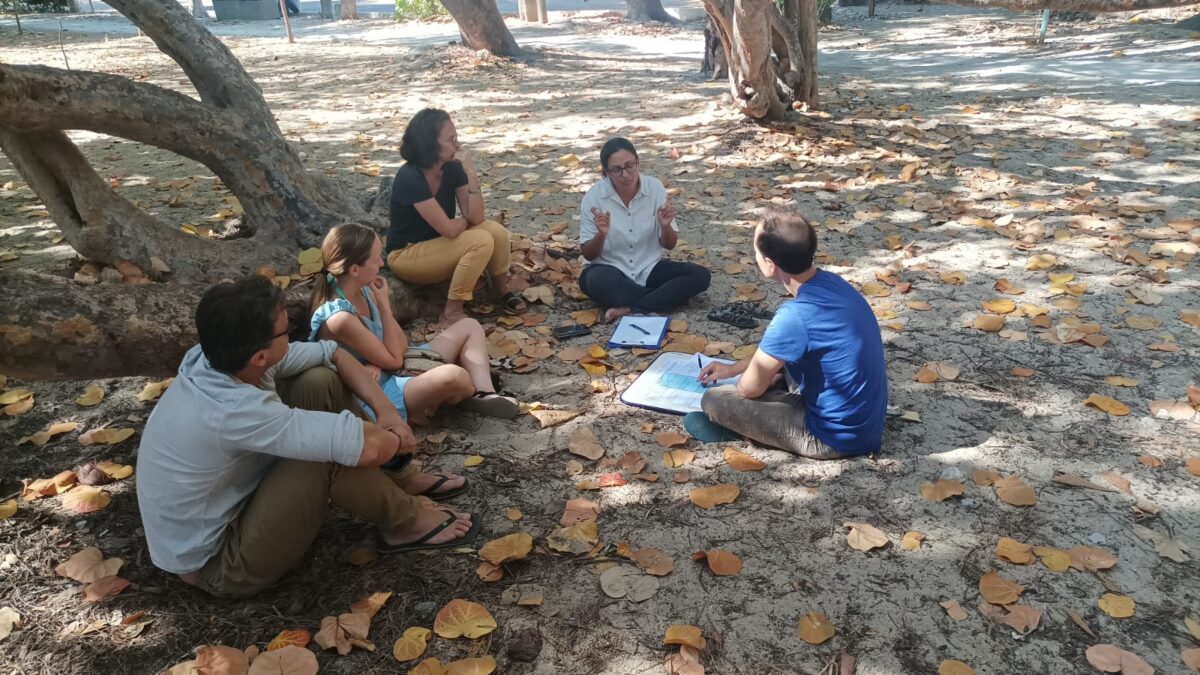
- Thursday (9 October): Visits to CITEB’s facilities at Le Port, a consortium meeting, and a participatory governance workshop at the Réunion National Marine Reserve — held on the beach, in low-tech mode, feet in the sand.
- Friday (10 October): Visits to CEDTM and the KELONIA marine turtle conservation museum, biodiversity hotspot excursions, and a synthesis and perspectives session to close the week.
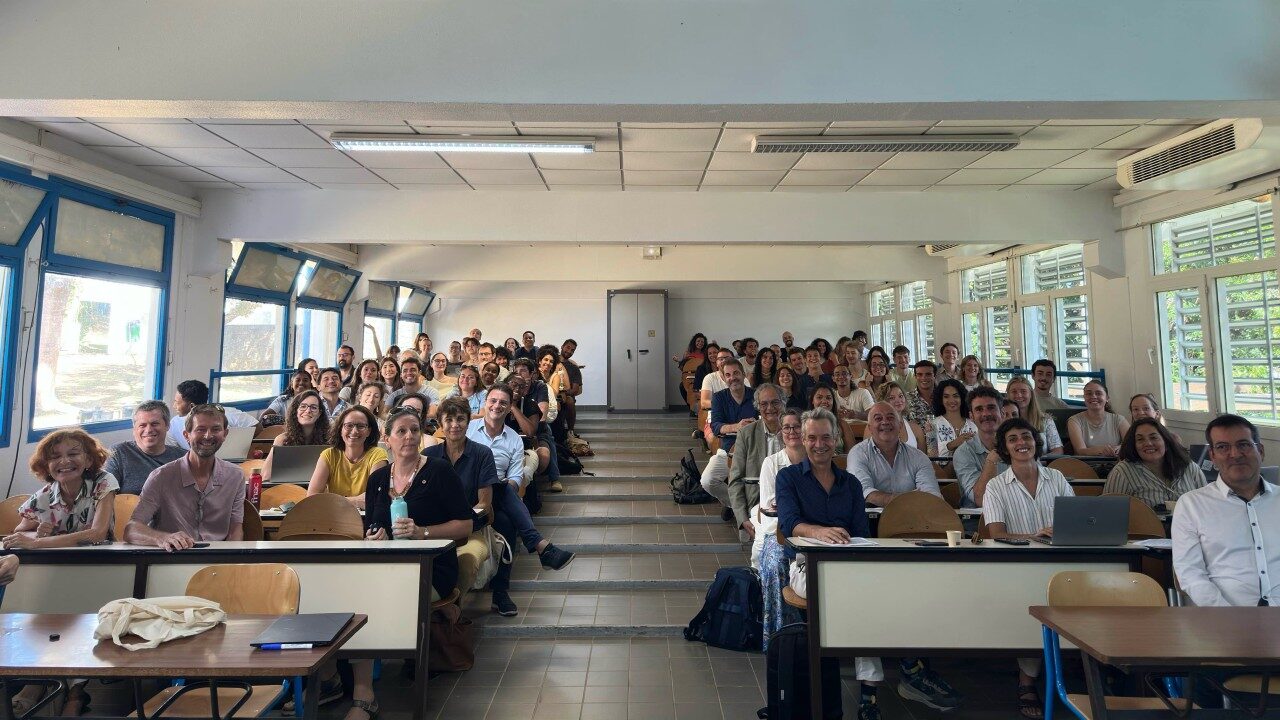
Setting the scene: Outermost Regions and the EU Ocean Pact
The scientific day opened with a keynote address by Patrizio Mariani (DTU Aqua, EuroMarine), who framed the strategic stakes of the symposium with clarity and ambition. His presentation — “From Edge to Center: Outermost Regions in the EU Ocean Pact” — made the case that Europe’s outermost regions should not position themselves as beneficiaries of European ocean policy, but as active contributors to shaping it. In a scientific and political context where the EU Ocean Pact is redefining Europe’s relationship with its seas, outermost regions hold assets — geographically, ecologically, and scientifically — that are simply unavailable elsewhere in the Union.
This framing was reinforced throughout the day by Luz Paramio (FRCT, Azores), who explored the positioning of outermost regions within the EU Mission “Restore Our Ocean and Waters”, and by Gotelenne Piaton (CMMI, Cyprus), who shared the experience of the Cyprus Marine and Maritime Institute in building twinning partnerships and governance capacity for the blue economy — a model rich in lessons for the REMORA partner institutions.
Three scientific seminars: a showcase of island research excellence
The scientific programme was structured around three thematic sessions, each chaired by a leading expert, and covering six of REMORA’s strategic research positionings.
- Biodiversity Hotspots & Oceanic Observatories
Chaired by Matthieu Lecorre (ENTROPIE, La Réunion), this session illustrated the depth and diversity of long-term biodiversity research conducted in and around the outermost regions. Presentations ranged from deep-sea mapping of Vulnerable Marine Ecosystems in the Azores (Filipe Porteiro, OKEANOS), long-term monitoring of marine biodiversity, fisheries and pollution (Gui Menezes, OKEANOS), and reef socio-ecosystem dynamics under climate change in the Western Indian Ocean (Aline Tribollet, IRD), to the Mascarene Archipelago Elasmobranch Observatory (Estelle Crochelet, ARBRE) and the governance and conservation work of the Réunion National Marine Reserve (Tévamie Rungassamy). Ingrid Puillat (EMSO-ERIC) opened pathways for access to European research infrastructures, while Alexandra Rosa (OOM, Madeira) presented the Madeira Coastal Insight Service (MCIS), a Copernicus Marine collaboration delivering real-time coastal intelligence. Bridges to build with Rui Caldeira, Alexandra Rosa and Gui Menezes emerged as natural priorities from this session.
- Cost-Effective Solutions & Small-Scale Technologies
Chaired by Gotelenne Piaton (CMMI, Cyprus), this session revealed a key strength of outermost region research: the capacity to design innovative, resource-efficient, and locally adapted solutions that have global applicability. Presentations covered continuous acoustic monitoring of coastal quietness and species detection (Julien Dautel, Fetch), tools for monitoring larval fish colonisation (Pierre Valade, OCEA Consult’), underwater photogrammetry for seagrass monitoring (Mathilde Facon, CREOCEAN OCEAN INDIEN), AI-assisted acoustic tools for coral reef restoration (Yann Bayle, Reef Pulse), and deep-sea exploration technologies developed in Madeira (Rui Caldeira, OOM). The session reinforced a message that resonated throughout the week: outermost regions are not just recipients of scientific methodologies — they are the places where new approaches are born and tested.
- Marine Ecosystems Governance & Sustainable Blue Economy
Chaired by Luis Lozano Gutiérrez (Dalula, Spain), this session brought together some of the most thought-provoking contributions of the day, addressing the governance, policy and societal dimensions of marine science. Topics ranged from the positioning of outermost regions in the EU Mission Ocean (Luz Paramio), the governance contribution of OKEANOS to Azorean fisheries and conservation policy (Gui Menezes), and the governance of La Réunion’s marine nature reserve between global norms and local realities (Laura Suarez Barrera, UMR PALOC), to Art-Science synergies for coral reef education in Madagascar (Pascale Chabanet, IRD), ocean literacy as a strategic research asset (Ivo Grigorov, DTU Aqua), 25 years of land-sea governance in La Réunion (Barbara Losen, UMR Espace-Dev), and a compelling proposal for a regional institute for ocean, climate and biodiversity science in the Southwest Indian Ocean (Vêlayoudom Marimoutou, Université Aix-Marseille). The session also addressed microplastics in fishery products from the Mascarene Islands (Jessica Beeharry, Chembiopro), bycatch and marine litter prevention (Emma Bello Gomez, ERINN), and lessons from Cyprus’s twinning experience (Gotelenne Piaton, CMMI).
Poster pitches: the next generation takes the floor
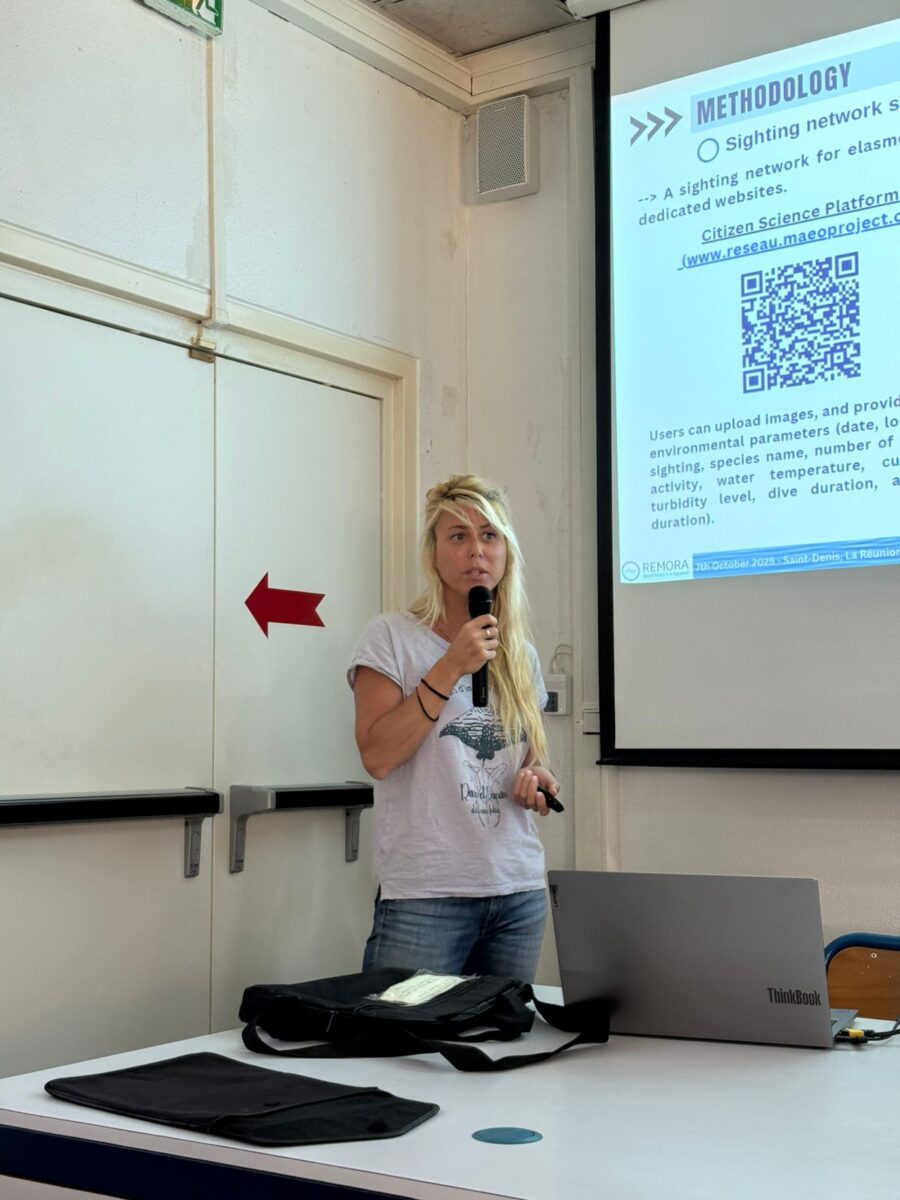
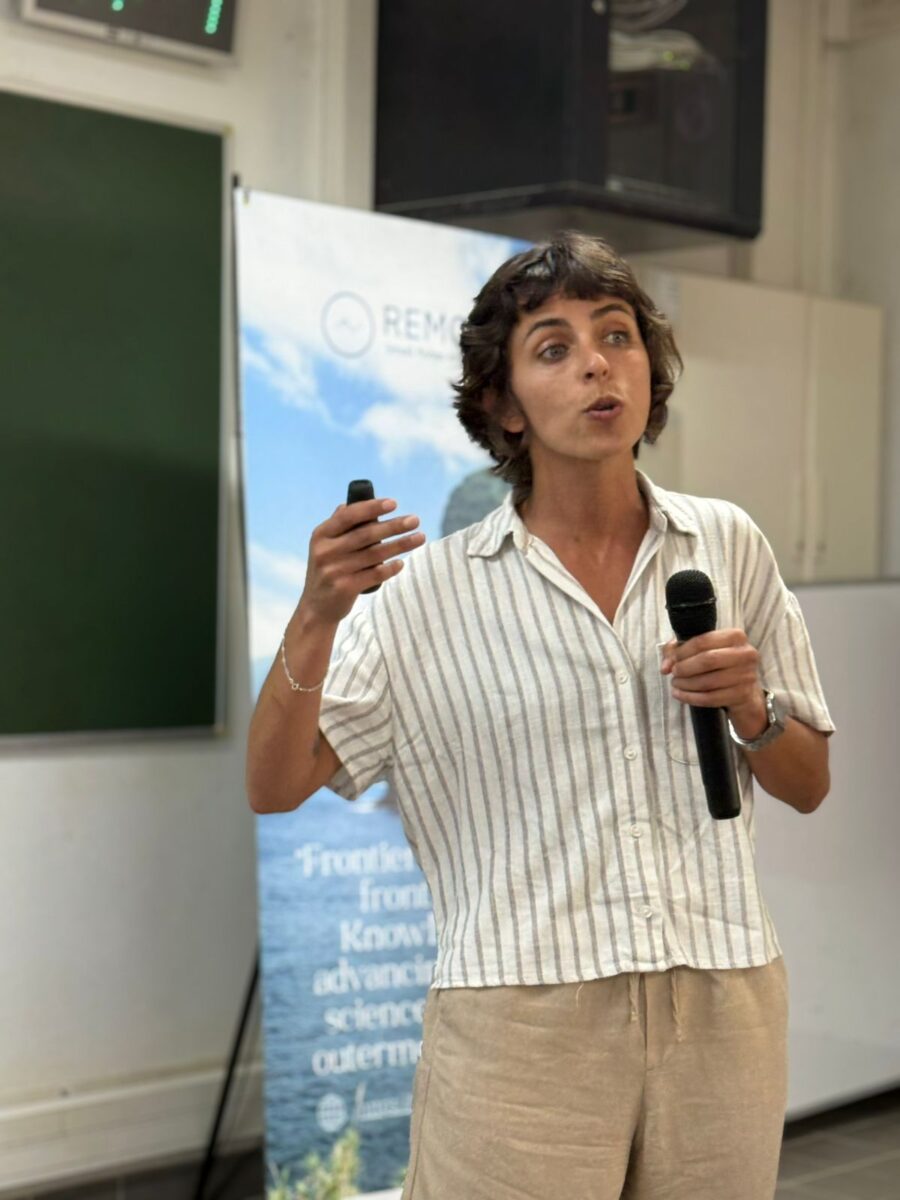
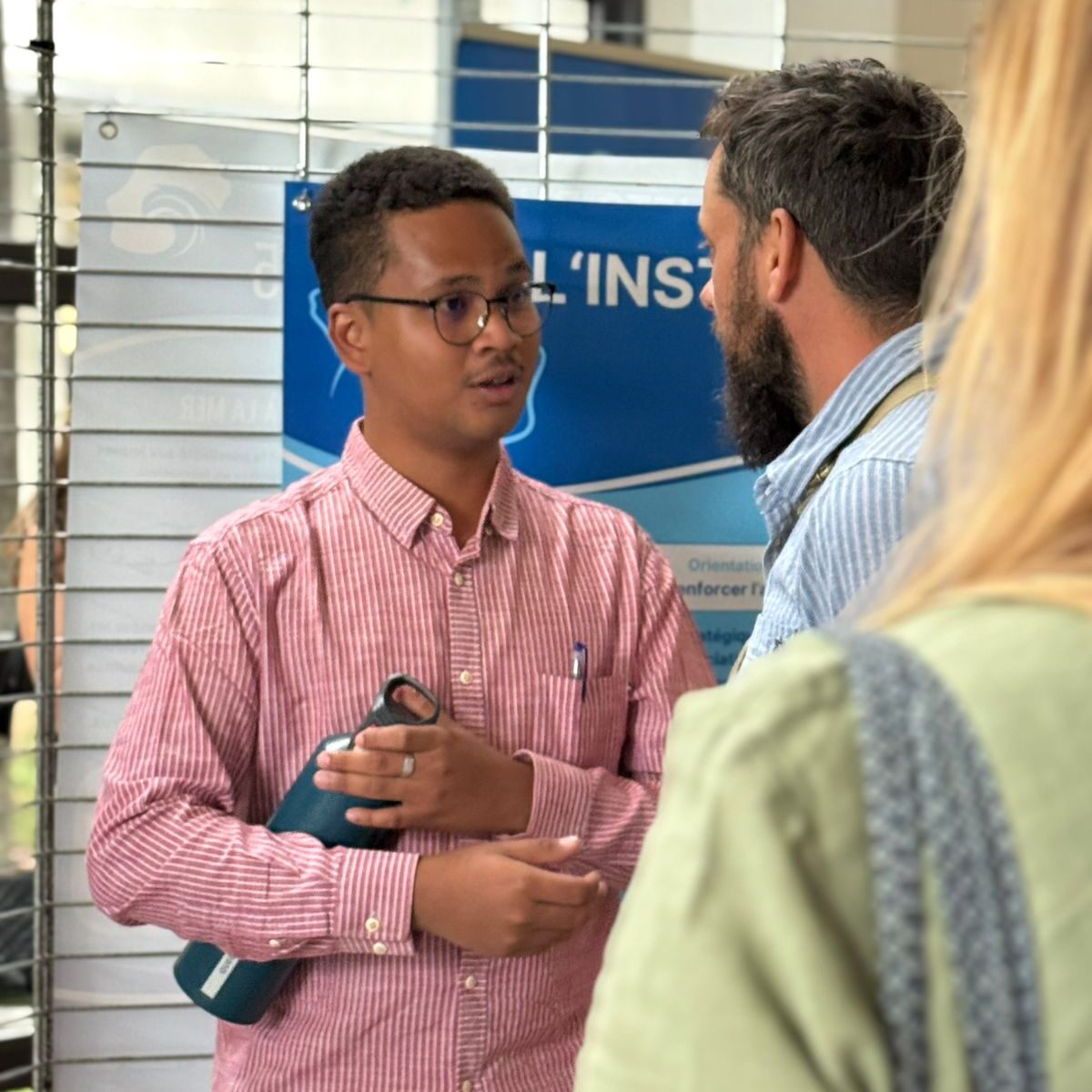
The evening networking and poster pitch session was one of the most energising moments of the week. Early-career researchers from La Réunion presented their work to their peers, to mentors, and to European guests — many for the first time in an international setting. Research on satellite-derived shoreline methods in Madagascar (Manoa Ranaivoson), microplastic ingestion by mesopelagic fish in the Southwest Indian Ocean (Miarana Razafimanantsoa), eDNA-based aquatic ecosystem management tools (Lou-Anne Jannel, OCEA Consult’), and the RAIE’UNION project on monitoring vulnerable lagoon rays (Estelle Crochelet, ARBRE) were among the highlights. These exchanges left a lasting impression — and for several students, sparked the ambition to pursue a networking fellowship to Madeira, the Azores or Cyprus.
The Horizon Europe hackathon: from ideas to projects
Wednesday’s working sessions moved from scientific exchange to concrete action. In the spirit of a hackathon, participants organised themselves around REMORA’s six strategic research themes to explore collaboration opportunities and begin shaping joint Horizon Europe project ideas. It was a pivotal moment: not just showcasing what outermost region research can offer, but starting to build the proposals that will carry it into European funding. The first project ideas that emerged from these workshops are now feeding into REMORA’s Incubator programme, which provides structured support for proposal development through the final phase of the project.
Governance on the beach: science meeting territory
One of the most memorable moments of the week was the participatory governance workshop held at the Réunion National Marine Reserve — on the beach, in low-tech mode, with participants quite literally putting their feet in the sand. Co-facilitated with the Reserve’s team, the session brought together researchers, practitioners and local stakeholders to explore how science can more effectively inform and be informed by marine governance processes. It was a powerful reminder that the best science is not conducted in isolation from territory and community — and that La Réunion offers uniquely rich ground for this kind of integrated, place-based research.
Field visits: accessing what cannot be found elsewhere
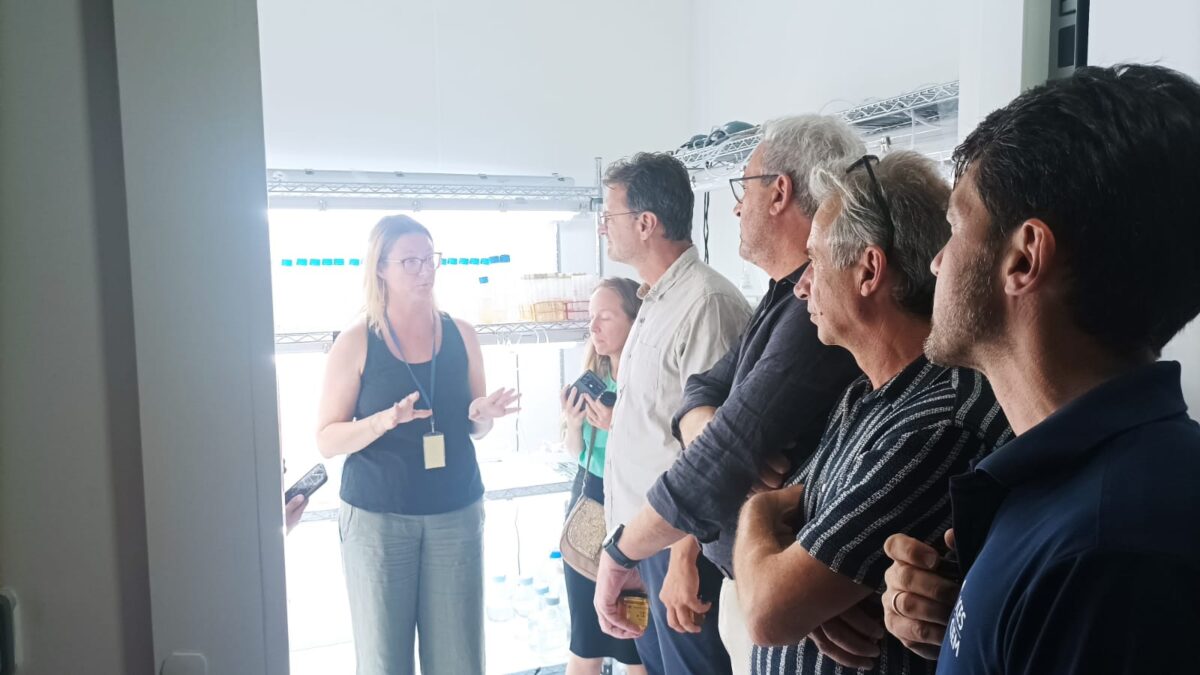
The visits to CITEB’s facilities at CYROI and Le Port, to CEDTM — the Centre for the Study and Discovery of Marine Turtles — and to KELONIA, one of Europe’s leading marine turtle conservation and education centres, were an important part of the symposium’s message. For researchers from continental Europe, these are not tourist stops: they are access points to a research environment that is genuinely unique within the European Union. The biodiversity hotspot excursions on the final day reinforced the same point. La Réunion’s natural environment is not a backdrop to the science — it is the science.
What this week meant
Beyond the programme, the symposium generated something harder to quantify but no less real: the emergence of genuine scientific friendships across geographies, the pride of seeing local students project themselves towards Madeira, the Azores or Cyprus, and the collective satisfaction of having shown that this kind of event — ambitious, open, rooted in place — is possible from La Réunion.
For REMORA, the symposium confirmed several things:
- Outermost regions have unique scientific assets that are not yet visible enough at the European level, and that researchers from the continent are genuinely eager to access.
- The appetite for Horizon Europe collaboration is real — what outermost region institutions need is sustained support to convert that appetite into submitted and funded proposals.
- La Réunion’s scientific community is ready to play a much larger role in the European Research Area than it currently does. This week was evidence of what that could look like.
What comes next
The energy of the symposium is now being channelled into concrete follow-up actions:
- The development of new joint Horizon Europe projects between island institutions and European research champions, supported through the REMORA Incubator.
- A dedicated Horizon Europe webinar to extend the momentum to the wider local research community in La Réunion.
- The finalisation of the Book of Presentations from the symposium, gathering the contributions of all speakers. Researchers and institutions wishing to receive the book are invited to contact the REMORA team.
The second REMORA International Symposium will take place in Madeira from 12 to 14 May 2026, under the theme “Beyond the Edge — The Outermost Regions in Horizon Europe”. It will build on the foundations laid in La Réunion and take the conversation further.
Acknowledgements
REMORA warmly thanks all speakers, workshop participants, poster presenters and field visit hosts who made this first symposium possible. A particular thank you to the Faculté des Sciences et Technologies of the Université de La Réunion, GIP CYROI, the Réunion National Marine Reserve, KELONIA and CEDTM for their hospitality and support throughout the week. Thank you also to Alina Tunin-Ley, Julie Cochard and Matthieu Lecorre for their essential contribution to the organisation of this event.
Contact person : Evelyne.tarnus (a) cellule-europe.re


